
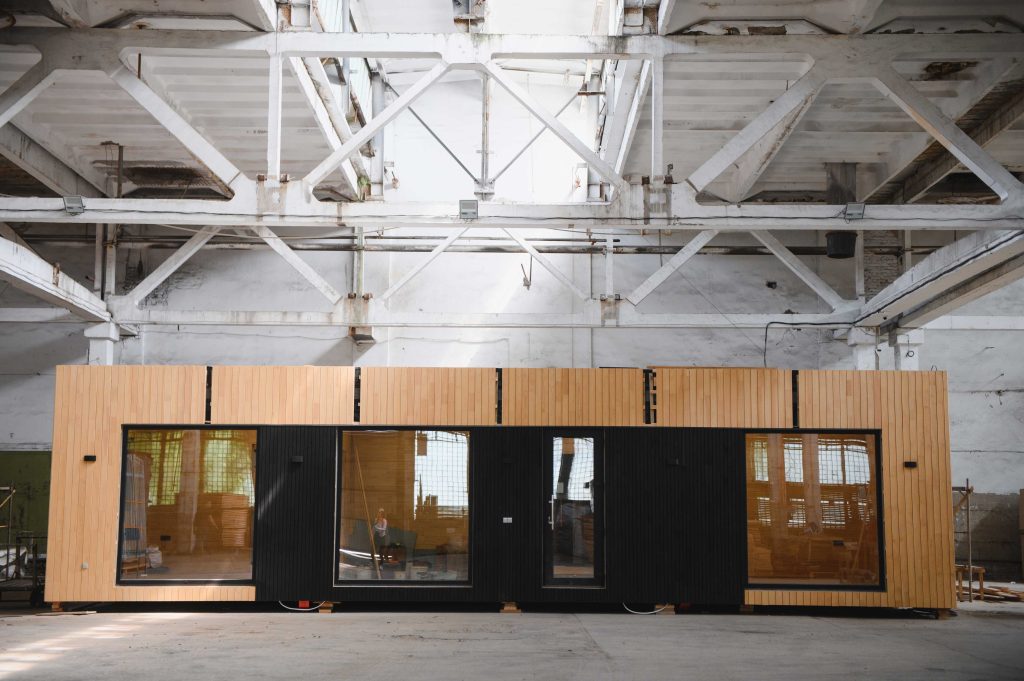
The construction industry is evolving rapidly as owners, developers, and government agencies seek faster, more efficient ways to deliver high quality infrastructure. With increasing demand for resilient facilities, workforce challenges, and tighter project schedules, modular construction and prefabricated building systems have emerged as innovative solutions that accelerate project delivery while improving quality, safety, and sustainability.
Rather than constructing every building component on site, modular and prefabricated construction involves manufacturing structural elements, mechanical systems, electrical assemblies, plumbing modules, and finished building sections in controlled production environments before transporting them to the project site for installation. This streamlined approach reduces construction time, minimizes disruptions, and enables projects to be completed more efficiently without compromising performance or quality.
Government Investment in Modular Construction
Governments around the world are increasingly embracing modular construction to modernize public infrastructure and address growing demands for efficient project delivery. In the United States, federal, state, and local agencies recognize prefabrication as an effective strategy for delivering transportation infrastructure, healthcare facilities, schools, military installations, government buildings, and affordable housing more quickly and cost effectively.
Agencies such as the U.S. General Services Administration (GSA), the Department of Defense (DoD), the Department of Transportation (DOT), and the Department of Housing and Urban Development (HUD) continue to support construction methods that improve project efficiency, reduce lifecycle costs, enhance sustainability, and strengthen infrastructure resilience. Modular construction aligns with these objectives by enabling faster deployment of essential public facilities while maintaining strict quality and safety standards.
Many transportation agencies also utilize accelerated bridge construction (ABC) techniques, which incorporate prefabricated bridge components to reduce traffic disruptions, improve worker safety, and shorten construction schedules for critical transportation projects.
Faster Project Delivery
One of the greatest advantages of modular construction is its ability to significantly reduce project timelines. While site preparation and foundation work are underway, building components can be manufactured simultaneously in off site facilities. This parallel workflow allows construction activities to occur concurrently rather than sequentially.
Once modules arrive on site, installation can often be completed in a matter of days or weeks rather than months, reducing overall project duration and enabling facilities to become operational much sooner.
For government agencies managing essential infrastructure, faster project delivery means reduced disruptions to public services, earlier occupancy, and improved return on investment.
Improved Quality Through Controlled Manufacturing
Prefabricated systems are produced in controlled manufacturing environments where weather delays, material exposure, and site variability are minimized. Standardized production processes allow teams to maintain consistent quality, perform detailed inspections, and reduce construction defects before components reach the jobsite.
This manufacturing approach results in higher quality building systems, improved precision, and greater consistency across large infrastructure projects.
Enhanced Worker Safety
Construction sites present numerous safety challenges, including adverse weather, elevated work areas, heavy equipment, and complex site conditions. Modular construction shifts much of the work into controlled production facilities, where safety risks can be better managed through standardized processes and improved working conditions.
Reducing the amount of on site construction also minimizes exposure to hazardous environments while improving overall project safety.
Sustainable Construction Practices
Modular construction supports sustainability by reducing material waste, improving resource efficiency, and minimizing environmental impacts. Factory controlled production optimizes material usage, reduces excess inventory, and allows unused materials to be recycled more effectively than traditional construction methods.
Fewer material deliveries, shorter construction schedules, and reduced on site equipment usage also contribute to lower carbon emissions and less disruption to surrounding communities.
These sustainable practices align with government initiatives focused on reducing environmental impacts while improving the resilience and efficiency of public infrastructure.