
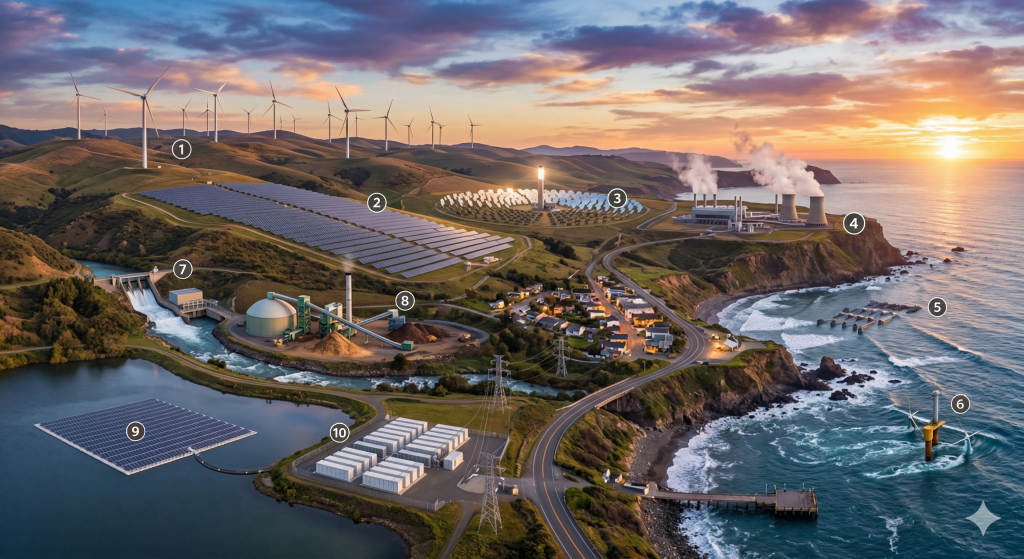
As the world accelerates the transition toward a cleaner and more sustainable energy future, renewable energy technologies are reshaping how communities, industries, and governments generate, distribute, and consume power. Rising energy demand, climate challenges, and the need for resilient infrastructure have driven significant investments in innovative energy solutions that reduce greenhouse gas emissions while improving energy security and economic growth.
The United States government continues to play a leading role in advancing renewable energy through policies, funding, research, and infrastructure modernization. Agencies such as the Department of Energy (DOE), the Environmental Protection Agency (EPA), the National Renewable Energy Laboratory (NREL), and the Department of the Interior (DOI) support the development and deployment of clean energy technologies that strengthen the nation’s energy independence and resilience.
Through legislation such as the Inflation Reduction Act (IRA) and the Infrastructure Investment and Jobs Act (IIJA), the federal government has expanded investments in renewable energy generation, grid modernization, battery storage, electric vehicle infrastructure, hydrogen technologies, and energy efficient buildings. These initiatives are helping transform America’s energy landscape while supporting sustainable economic development.
Here are ten renewable energy technologies shaping the future of infrastructure and clean energy.
1. Solar Photovoltaic (PV) Systems
Solar energy remains one of the fastest growing renewable energy sources worldwide. Modern photovoltaic panels convert sunlight into electricity with increasing efficiency and lower installation costs.
Governments continue to invest in utility scale solar farms, rooftop solar systems, and community solar programs to expand clean energy production while reducing dependence on fossil fuels.
2. Wind Energy
Onshore and offshore wind farms generate large amounts of clean electricity using advanced turbine technology. Modern wind turbines are more efficient, reliable, and capable of producing power under a wider range of weather conditions.
Federal investments in offshore wind development are expanding renewable energy capacity while creating new opportunities for infrastructure and economic growth.
3. Battery Energy Storage Systems (BESS)
Renewable energy generation often varies throughout the day. Battery Energy Storage Systems store excess electricity generated by renewable sources and deliver power when demand increases or renewable production decreases.
Energy storage improves grid reliability, enhances resilience during outages, and supports greater integration of renewable energy across the electrical system.
4. Green Hydrogen
Green hydrogen is produced by using renewable electricity to split water into hydrogen and oxygen through electrolysis. As a zero carbon fuel, hydrogen has the potential to decarbonize industries that are difficult to electrify, including heavy manufacturing, aviation, shipping, and long distance transportation.
Governments continue investing in hydrogen infrastructure to support future clean energy applications and industrial sustainability.
5. Geothermal Energy
Geothermal systems harness heat from beneath the Earth’s surface to provide reliable electricity generation and highly efficient heating and cooling for buildings.
Because geothermal energy operates continuously regardless of weather conditions, it provides a dependable renewable energy source that complements solar and wind generation.
6. Smart Electrical Grids
Renewable energy requires a modern electrical grid capable of managing distributed energy resources efficiently. Smart grids use advanced sensors, automation, digital communications, and intelligent controls to optimize electricity distribution while improving reliability and reducing outages.
Government modernization initiatives continue to strengthen grid resilience as renewable energy adoption increases nationwide.
7. Building Energy Management Systems
Intelligent Building Energy Management Systems optimize heating, ventilation, air conditioning (HVAC), lighting, occupancy, and equipment performance to reduce energy consumption.
These systems use real time monitoring and automation to improve operational efficiency while lowering utility costs and reducing carbon emissions across commercial, industrial, and government facilities.
8. Electric Vehicle Charging Infrastructure
Transportation electrification is a critical component of reducing greenhouse gas emissions. Governments continue investing in nationwide electric vehicle charging networks to support the transition toward cleaner transportation.
Expanded charging infrastructure improves accessibility while encouraging greater adoption of electric vehicles across both public and private sectors.
9. Microgrids and Distributed Energy Systems
Microgrids combine renewable energy generation, battery storage, and intelligent controls to create localized energy systems capable of operating independently from the main electrical grid during emergencies.
Military installations, hospitals, universities, airports, utilities, and government facilities increasingly utilize microgrids to improve resilience, ensure operational continuity, and strengthen energy security.
10. Sustainable Building Technologies
Modern buildings integrate renewable energy with high performance building envelopes, efficient HVAC systems, LED lighting, smart controls, water conservation technologies, and sustainable materials to significantly reduce energy consumption.
These technologies help governments and private organizations achieve sustainability objectives while improving occupant comfort and reducing long term operating costs.