
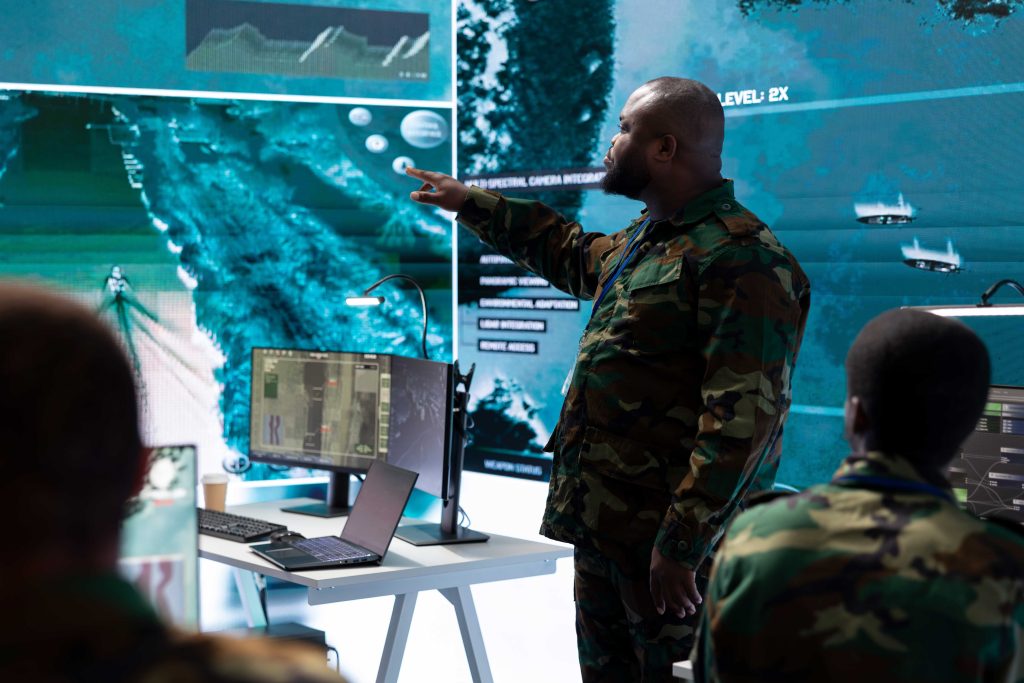
As threats to critical infrastructure continue to evolve, organizations must detect and respond to risks faster than ever before. From cyber attacks and physical security breaches to operational disruptions and infrastructure failures, governments and industry are leveraging Artificial Intelligence (AI) to improve situational awareness, strengthen resilience, and enhance decision making. AI has become a powerful tool for identifying potential threats before they escalate, enabling agencies to protect people, assets, and essential services more effectively.
The U.S. government has recognized AI as a strategic capability for national security and infrastructure protection. Agencies including the Department of Defense (DoD), the Department of Homeland Security (DHS), the Cybersecurity and Infrastructure Security Agency (CISA), the Department of Energy (DOE), and the National Institute of Standards and Technology (NIST) are advancing the responsible adoption of AI to improve cybersecurity, strengthen critical infrastructure, support emergency response, and enhance operational readiness. Through policies, research initiatives, and public private partnerships, these agencies are helping accelerate AI innovation while promoting security, transparency, and ethical use.
AI Powered Threat Detection
Traditional security systems often rely on predefined rules or manual monitoring, making it difficult to identify sophisticated or rapidly evolving threats. AI enables continuous analysis of massive volumes of data from multiple sources including sensors, surveillance systems, operational networks, and cybersecurity platforms to detect unusual patterns and potential risks in real time.
By recognizing anomalies that may otherwise go unnoticed, AI helps security teams identify suspicious activities earlier, allowing faster investigation and response before incidents become major disruptions.
Strengthening Cybersecurity
Cyber threats continue to grow in complexity as attackers target government systems, utilities, transportation networks, healthcare organizations, and critical infrastructure. AI enhances cybersecurity by analyzing network traffic, detecting malicious behavior, identifying compromised devices, and supporting automated threat response.
Government agencies increasingly use AI to improve vulnerability management, prioritize security risks, monitor federal networks, and strengthen cyber resilience across mission critical systems. Combined with established cybersecurity frameworks such as the NIST Cybersecurity Framework, AI helps organizations reduce risk while improving operational continuity.
Protecting Critical Infrastructure
Critical infrastructure including power grids, transportation systems, water treatment facilities, telecommunications, and public buildings depends on continuous monitoring to remain safe and operational. AI supports infrastructure protection by identifying equipment anomalies, monitoring operational conditions, predicting potential failures, and improving maintenance planning.
These capabilities help infrastructure owners reduce downtime, extend asset life, improve reliability, and maintain essential services even during challenging operating conditions.
Enhancing Physical Security
AI is transforming physical security through intelligent video analytics, access control, perimeter monitoring, and situational awareness. Advanced computer vision systems can assist security personnel by identifying unusual activity, detecting unauthorized access, monitoring restricted areas, and supporting rapid response during emergencies.
For government facilities, military installations, transportation hubs, and public infrastructure, AI improves the ability to monitor large environments while allowing security professionals to focus on higher priority decisions.
Supporting Emergency Response
During emergencies, timely information is essential for effective decision making. AI can rapidly process data from weather systems, traffic networks, emergency communications, drones, and field sensors to provide emergency managers with actionable insights.
Government agencies use these technologies to improve disaster preparedness, coordinate response efforts, allocate resources efficiently, and restore essential services more quickly following natural disasters or infrastructure disruptions.
Predictive Analytics for Risk Prevention
One of AI’s greatest advantages is its ability to anticipate future risks. Predictive analytics helps organizations evaluate historical trends, environmental conditions, operational data, and maintenance records to identify vulnerabilities before failures occur.
Rather than reacting to incidents after they happen, agencies can make proactive decisions that reduce costs, improve resilience, and enhance long term infrastructure performance.
Responsible AI in Government
As AI adoption grows, governments are placing strong emphasis on responsible implementation. Federal
agencies continue to develop standards and governance frameworks that promote transparency, accountability, privacy, cybersecurity, and human oversight. Organizations such as NIST provide guidance to help ensure AI systems are secure, reliable, trustworthy, and aligned with public interests.
Responsible AI not only improves operational performance but also builds public confidence in emerging technologies used to support government missions.
Public Private Collaboration
Innovation in AI depends on strong collaboration between government agencies, technology providers, engineering firms, and research institutions. Public private partnerships accelerate the development of advanced solutions that improve infrastructure resilience, enhance cybersecurity, and strengthen national preparedness while ensuring technologies meet rigorous safety and security standards.